
Callum Reid, Features Reporter.
It is two o’clock in Brisbane and the office bathroom mirror is not being kind. Foundation has pooled into the lines beside the nose, the highlighter has gone patchy across the cheekbones, and the setting spray that promised twelve hours of wear made it to about four. At home there are three more bottles exactly like it, half-full, each bought after a different hopeful scroll through reviews. The honest question is not which bottle to buy next. It is what the spray is meant to do, chemically, and whether the one already on the shelf is being used correctly. Most setting sprays, regardless of price, rely on the same small family of film-forming ingredients to hold makeup in place. The gap between a department-store mist and a budget one is often smaller than the price tag suggests. How the spray is applied, and to what kind of skin, changes the result far more than the label does.
- A thin polymer film does the holding, not a mysterious ‘lock’: most setting sprays work by drying into a flexible film over makeup, a mechanism closer to varnish than magic.
- Skin type and local humidity decide the right formula far more than the finish name on the bottle: a mattifying mist and a dewy one often share most of their ingredient list.
- Technique adds more wear time than an upgrade in price: distance, cross-spray pattern and a sixty-second wait before touching the face matter more than the brand.
What The Mist Is Actually Made Of
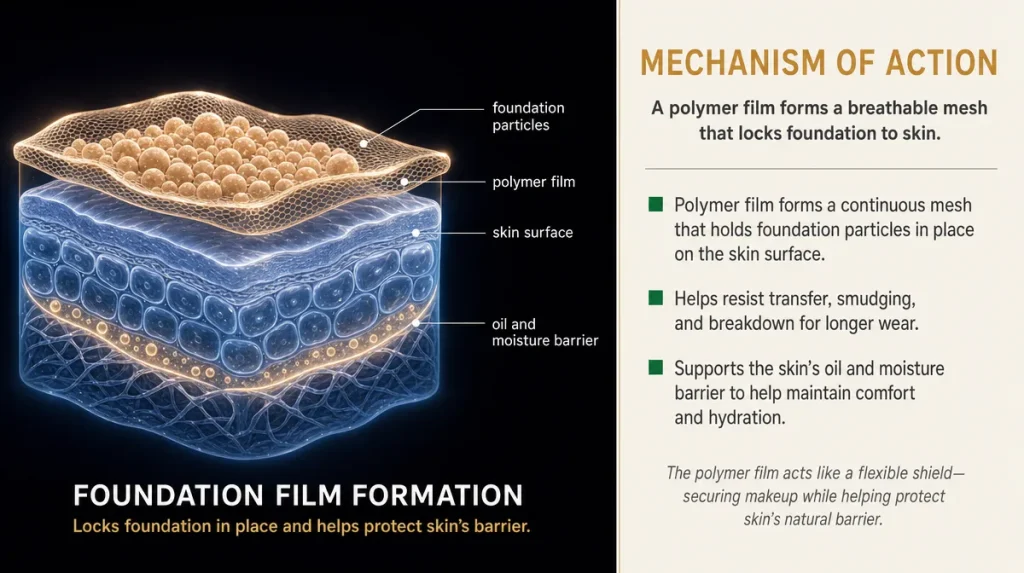
Most setting sprays, whatever their marketing claims, lean on the same handful of film-forming ingredients: acrylates copolymers, PVP, or similar polymers that dry into a thin, flexible layer over the skin’s surface. Think of varnishing a timber floor. The varnish does not change the wood underneath; it sits on top, filling tiny gaps and creating a slightly tacky surface that resists scuffing. A setting spray does something similar to makeup, filling the microscopic gaps between powder particles and creating a thin mesh that slows the rate at which oil, sweat and touch can lift pigment away.
This is also why two sprays with very different marketing, one promising a matte finish and one a dewy glow, can share most of the same core ingredients. The finish usually comes down to a small percentage difference in silicone or oil content, not a fundamentally different chemistry.
The consumer body CHOICE, which has lab-tested household products since 1959, has noted in its general guidance on cosmetics that overlapping ingredient lists across price tiers are common in categories like this one, something worth remembering before paying a premium for a fancier bottle. The mechanism is simple enough to judge yourself, once you know what to look for on the label, which is covered further down.
Reading Your Own Skin Before You Read The Label
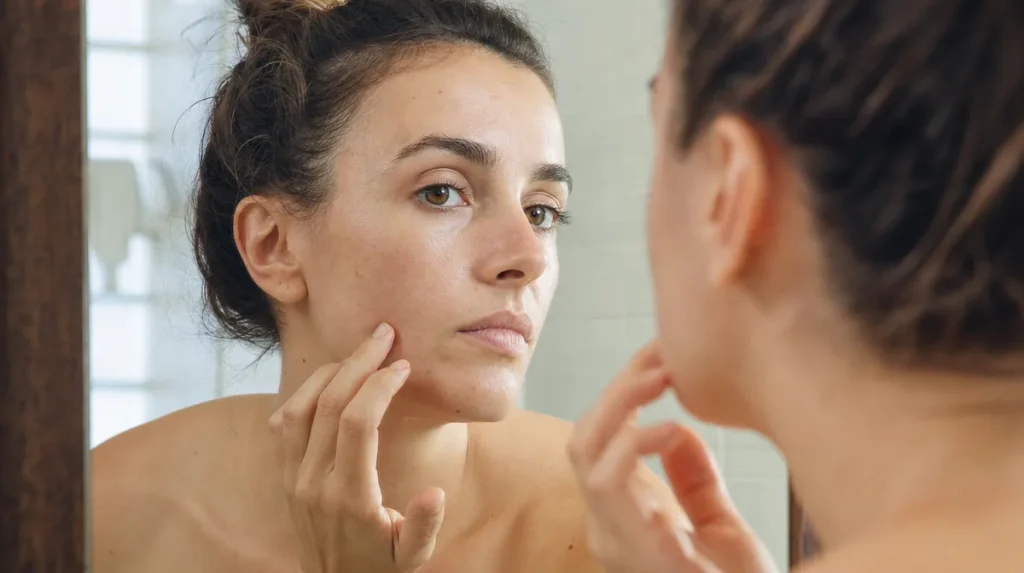
Before comparing formulas, it helps to be honest about what your skin does over a normal day. Oily skin produces more surface sebum, which can break down a film faster, particularly around the T-zone. Dry skin has less natural oil but can be more sensitive to the alcohol some sprays use to help them dry quickly. Combination skin, the most common type across Australian climates, often needs different handling across different zones of the face.
A simple test: blot a bare, moisturised cheek with a clean tissue at midday on a normal day, with no products on. If the tissue picks up visible oil, your skin runs oilier than you might assume, and a lighter, more mattifying formula with less oil content will likely outlast a dewy one. If the tissue comes away dry, a hydrating mist with glycerin or similar humectants is more likely to behave well without looking powdery or cakey later in the day.
Humidity matters as much as skin type. A formula that performs well in a Melbourne winter can behave quite differently in Darwin’s wet season, since ambient moisture slows how quickly any film-forming spray sets. The Australasian College of Dermatologists, in its general public guidance on skin care, notes that climate and humidity are significant, and often overlooked, variables in how topical products perform over a day. None of this means buying a different spray for every season. It means understanding that a spray behaving differently in a new city is not a fault, it is physics.
What’s On The Label: Signal Versus Marketing Noise
Ingredient lists for setting sprays are short enough to actually read, which makes them one of the easier cosmetic categories to judge for yourself. Near the top, look for the actual film formers: acrylates copolymer, PVP, or VP/VA copolymer are common examples. These are doing the structural work.
Further down, humectants such as glycerin or propanediol help prevent a flat, powdery look by drawing a small amount of moisture to the skin’s surface. Alcohol, usually listed as alcohol denat., helps the spray dry quickly and can improve wear time on oily skin, but it can also be drying for those with a compromised skin barrier, a concern the Australasian College of Dermatologists raises in general guidance on cosmetic alcohols and sensitive skin.
Marketing terms like ’24-hour wear’, ‘weightless’ or ‘skin-perfecting’ are not regulated descriptors in Australia the way sun protection factor is. They describe intent, not a measured result, and should be read as a brand’s hope rather than a laboratory finding. By contrast, a listed percentage of a specific humectant, or a stated alcohol-free formulation, tells you something concrete you can act on.
A fair rule: the fewer and more familiar the active ingredients, the easier it is to predict how a spray will behave on your skin. A long list of fragrance compounds and plant extracts near the top is more often there for sensory appeal than function, and is worth noting if you have reactive skin.
The Technique That Actually Extends Wear
Application technique changes outcomes more reliably than switching products, and it costs nothing to correct. Hold the bottle roughly fifteen to twenty centimetres from the face, further than most people instinctively hold it. Too close, and the spray lands as droplets heavy enough to disturb the makeup underneath rather than settling as a fine mist.
Spray in a loose cross pattern: one pass left to right, one pass top to bottom, rather than one direct burst at the centre of the face. This spreads the film evenly instead of pooling it on the nose and forehead, where oil is usually heaviest anyway.
Then wait. A full sixty seconds before touching the face, longer in humid conditions, gives the film time to set. Pressing a cloth or a hand to the face during this window is the single most common reason a spray seems to ‘not work’: the still-wet film is disturbed before it has had a chance to form.
Two light coats generally outperform one heavy one, for the same reason two thin coats of varnish dry harder than one thick one. If you are also using a setting powder, apply the spray after the powder, not before it, since spraying first can reactivate and smear the makeup rather than seal it.
The Mistakes Almost Everyone Makes
The most common mistake is spraying too close and too heavily, which can make a perfectly good formula perform badly. The second is skipping a primer or moisturiser underneath entirely and expecting the spray to compensate for dry, flaking patches; a setting spray sits on top of makeup, it cannot repair the skin beneath it.
A third mistake is reapplying mid-afternoon without removing the oil or sweat first. Spraying over a shiny T-zone simply adds a film on top of oil, which breaks down faster than a film applied to clean, blotted skin. Blotting first, then reapplying a light mist, generally performs better than a heavy top-up alone.
People with dry or sensitive skin sometimes choose a spray with a high alcohol content because it is marketed for ‘long wear’, then find their skin feels tight by evening. Reading for alcohol denat. near the top of the ingredient list, as covered earlier, avoids this before it happens.
Finally, many people judge a spray after a single use on an unusually hot or humid day and write it off unfairly, or credit it when conditions happened to be mild. One wear, in unpredictable weather, is not a fair trial for any formula.
Judging Results: What To Expect, And By When
A fair trial of a setting spray needs more than one wear. Three separate days, ideally covering a mix of conditions, such as one ordinary indoor day, one warmer or more humid day, and one day with more physical activity, gives a realistic picture.
Look for specific, observable signs rather than a vague impression of whether it ‘worked’. Does foundation still sit evenly on the nose and chin by the afternoon, or has it separated into visible patches. Does the makeup transfer onto a collar or a face mask noticeably more than it did at nine in the morning. A small 2021 study in the International Journal of Cosmetic Science, testing film-forming setting sprays against no setting step over an eight-hour wear period in a cohort of 46 participants, found a measurable reduction in makeup transfer with the spray, though the degree varied considerably between individual skin types.
That variation is the point. A formula that performs well for one person’s skin chemistry may perform only moderately for another’s, and neither outcome necessarily says much about overall product quality. Give a new spray a genuinely fair trial before judging it, and keep a mental note of which conditions it handled well or poorly, since that detail is more useful than a star rating when deciding what to try next.
Setting Spray, Setting Powder, Or Both
Setting spray and setting powder solve overlapping but distinct problems, and treating them as interchangeable is a common source of disappointment. Powder physically absorbs surface oil and adds a small amount of texture for the spray’s film to grip onto. Spray adds a flexible film over the whole face, including areas where powder would look heavy or cakey, such as under the eyes or over textured skin.
Oily skin, particularly through the T-zone, usually benefits from both: a light powder where oil is heaviest, followed by a spray across the whole face to even out the finish. Dry or mature skin often does better with spray alone, since powder can settle into fine lines and emphasise texture rather than smoothing it.
Humidity plays a role here too. On especially humid days, a light powder step before spraying can help the film set rather than sliding on oily patches. On dry winter days, powder alone can look flat and chalky, and a hydrating spray does more of the finishing work.
There is no single correct combination for everyone. The useful habit is adjusting the ratio of powder to spray by season and by zone of the face, rather than relying on one routine year-round regardless of conditions.
Key Takeaways
- A setting spray works mainly through a thin polymer film, not a special ‘lock’ mechanism. Differences in finish usually reflect small changes in oil or silicone content, not a different core chemistry.
- Match formula to your own oil levels and local humidity rather than to the finish name on the bottle: oilier skin and damper climates tend to suit lighter, less oily formulas.
- Hold the bottle 15 to 20 centimetres away, spray in a loose cross pattern, and wait a full minute before touching your face. This single habit extends wear more reliably than switching brands.
- Alcohol denat. near the top of the ingredient list signals faster drying but more potential dryness; humectants such as glycerin signal a softer, more hydrating finish.
- Judge a new spray over at least three different days and conditions before deciding whether it works for you.
A Sixty-second Checklist Before You Buy
- Blot bare skin at midday to check your real oil level, not the one you assume you have.
- Scan the ingredient list for a film-forming polymer near the top and note whether alcohol denat. appears early or late in the list.
- Decide whether you need powder as well, based on where your skin gets oily during the day.
- Plan to test any new spray over three different days and conditions, not one.
- Remember that marketing finish names describe intent, not a measured outcome.
This article is general information only and does not replace personalised advice from a dermatologist or pharmacist.
Individual results vary depending on skin type, climate and application technique.